DGNB Project ELIA Service Center
-
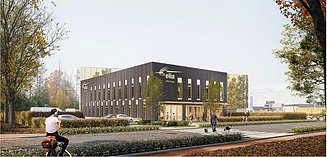
The sustainable design incorporated the following key elements:
- Water infiltration systems for efficient water management
- Green roofs that contribute to biodiversity
- Modular elements, including timber-frame construction, combined with a precast concrete system.
The design aimed to reduce the environmental impact of the new building. The project achieved BREEAM Excellent certification with an overall score of 71.9%. BREEAM stands for Building Research Establishment Environmental Assessment Method and assesses various aspects of the sustainability performance of buildings.
In addition to the building’s BREEAM Excellent certification, the project also achieved a DGNB certification for sustainable construction sites. This certification covers the construction process, with a focus on aspects including site organisation, communication, health and safety, resource conservation and the quality of execution. The project achieved a score of 77%, making it the first construction site in Belgium to receive official DGNB certification for sustainable construction sites.
The project was delivered in collaboration with Elia as the client, Architectesassoc+ as the architect and Arcadis as the engineering consultancy.
This project is being delivered in collaboration with Elia (client), Architectesassoc+ (architect), and Arcadis (engineering firm), among others.
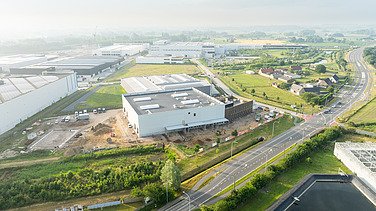
Features
- Building plot
12,678 m² - Built-up area: office + workshop and warehouse
3,794 m² - Gross floor area: office + workshop and warehouse
6,600 sq. ft - Above ground: office
2 storeys
Atelier and warehouse
2-3 storeys
Construction period
- Entire project
November 2024 to Q4 2025 - Structural works
November 2024 to 05-2025 - Finishing works
April 2025 to Q4 2025
Site regulations
Working hours on site were:
- Monday to Friday
6:30 a.m. to 7 p.m
-
-
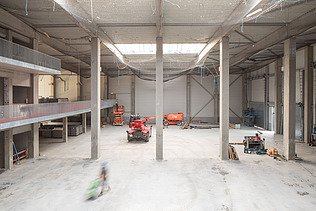
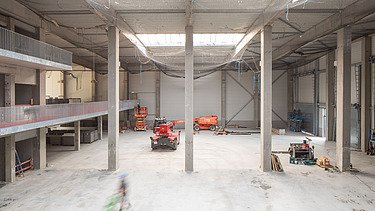
Selected measures in the Elia Service Center project
- 5S method
The 5S method was applied. Its implementation focused on sorting, systematisation, cleaning, standardisation and self-discipline. - Rainwater reuse for the construction site
During construction, the rainwater tanks were installed from the start of the structural works. This made it possible to store rainwater or pumped drainage water in the rainwater tanks and septic tanks from the construction phase onwards. By installing a pump and water connection, this water could subsequently be reused for cleaning equipment. - Modular elements
The project was built using various modular construction systems. These included a combination of timber-frame construction, precast concrete structures and steel structures. This approach made it possible to deliver custom-made elements to the construction site and reduce waste generation. - Logistics
A detailed logistics plan with clearly defined access routes to the project was drawn up. The construction site had clearly designated loading and unloading areas located close to the tower crane. Hauliers received clear instructions on which loading and unloading area to report to. Deliveries were scheduled at specific times and organised on a just-in-time basis.